
Introducing pioneers in psychology and ethical issues
I wrote this essay during my Access to University course (2021-2022) and thought I would share it along with some others over the following summers throughout my degree journey.
Please do not plagiarise my work.
Human-written, AI-free!
Three contributions to psychology:
This report will outline three psychologists and their research into understanding human behaviour, their methods and whether their contribution has benefitted society.
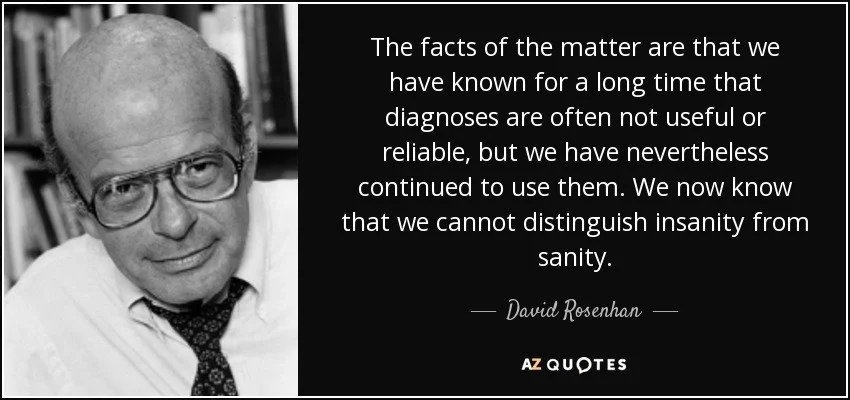
Introducing Rosenhan: Dr David Rosenhan is a psychologist and professor who studied mental health.
The Experiment“Being sane in insane places”
The aim:
To discover whether medical professionals could tell the difference between ‘insane’ and ‘sane’ people, he also wanted to know what life was like inside a psychiatric hospital.
The method:
He and 9 mentally healthy participants intended to admit themselves to a psychiatric hospital presenting with a fictional symptom of hearing a voice that said ‘Hollow’, ‘empty’ and ‘thud’. Once admitted, the participants ceased simulating any signs of abnormality and continued as themselves. They would also journal their experience to recognise what it was like to be admitted.
The results:
All participants were admitted and diagnosed with ‘Paranoid Schizophrenia’, with one being diagnosed with ‘manic depressive’
After an average of 19 days, the participants were discharged as being ‘in remission’. The longest participant was Rosenhan himself, discharged after 52 days; the least being 7 days, subsequently stating they were ‘fine’. It was observed that 35 of 118 patients could tell the participants were ‘fakes’; furthermore, the professionals could not distinguish between healthy and unhealthy behaviour, for example, staff were recorded labelling healthy behaviour as pathological, furthering the belief that they cannot distinguish between insane or sane.
What did the research teach us?
That doctors cannot identify an individual’s mental health, including considering if they have made an incorrect diagnosis. ‘Labels’ remain, despite behaviour change (Dr Rosenhan, 1973).
The negative aspects of the research:
-Verifying the details was difficult as the study kept all names confidential.
- There was a possibility of deception if the participants exaggerated.
- The participants were friends of the researcher, and Rosenhan was involved, resulting in a biased opinion.
- There was a preconceived idea, which could have led to looking for problems and overciting, especially as the anti-physiatry movement was looking for issues and the desire to have the newest exciting study.
- Patients may not have wanted to be disturbed and did not consent.
- The study did not consider that the doctors may have wanted to be safe and not underdiagnose and discharge mentally ill people. Neither did the state that patients desire to be listened to and validated, which the doctors did, thus it is the responsibility of the doctors to make a correct diagnosis (E. N. Angel, 2021).
How did the research impact humanity?
The perception of diagnosis of mental health and individuals stimulating ‘insanity’ for their own gain is apparent; thus, the validity of diagnosis from the DSM framework is compromised (Frontier psychiatrist, 2010).
The American Psychiatric Association changed the Diagnostic and Statistical Manual of Mental Disorders in the 1980s, 3rd edition, with a further detailed list of symptoms for mental illnesses, and multiple symptoms must be evident for diagnosis, as a result of Rosenhan’s experiment (R. Gross, 2020; E. N. Angel, 2021).
Rosenhan’s research and the report published in the ‘Science’ journal sparked more awareness of mental health and the maltreatment of patients, with staff needing better training (E.N.Angel, 2021; Frontier psychiatrist, 2010).
Conclusion: The stigmatisation of mental health issues remains, although the understanding and treatment have improved over the years.
Introducing Harlow: Harry Harlow was a psychologist interested in attachment theory.
The experiment“Monkeys”
The Aim: To research Newborn monkeys and how they bond and whether an attachment would be formed with a provider of nutrition or their need for comfort.
The Method:
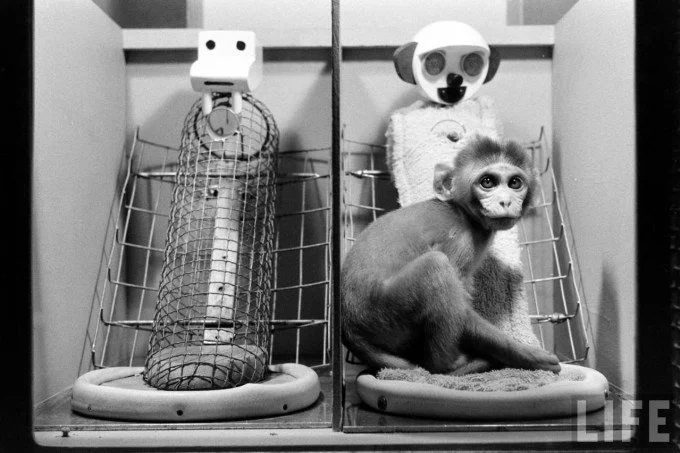
During the 1950’s and 1960’s, Harlow researched attachment with a wire monkey from birth, one with a feeding bottle and the other covered with a terry towelling covering, which provided no food. During a second observation, Harlow placed the monkeys in isolation.
The results:
During the wire mother trials, the monkeys spent up to 15 hours a day on the comfort monkey and would only go to the wire monkey for feeding. When a scary object was placed within the cage, the monkey would turn to the comfort surrogate, which would provide security for the monkey.
The negative aspects of the research:
Ethical issues were raised due to the unethical treatment of the monkeys and the emotional and sometimes irreversible damage to them.
Other issues raised included:
- The monkeys were bred in captivity for the study and could not consent.
- The monkey is not human, and the experiment’s validity was questionable.
What did the research teach us?
The monkey’s behaviour supported the theory that comfort was more important for living creatures than physical. Harlow concluded that maternal deprivation can lead to irreversible damage, although when presented with some socialization they could retain healthy behaviour in the early years.
The controlled, qualitative data collection from the experiment alongside a large number of monkeys with variables taught us that attachment was important for social development, thus further advanced thinking, rational and research developed over the years.
How did the research impact humanity?
It aided society in recognising the magnitude of bonding; moreover, social workers to understand the importance of attachment and emotional comfort and the risk factors associated with child neglect and abandonment. The study overran the physical needs of the psyche, which was believed to be paramount.
Conclusion:
Harlow’s study concluded that you can’t spoil a baby, as prior advice was given to avoid comforting a crying baby and allow them to self-soothe and resulted in changing the approach to parenting in the western world (S.A. McLeod, 2020; C. Colin, 2018).
Introducing B.F. Skinner:
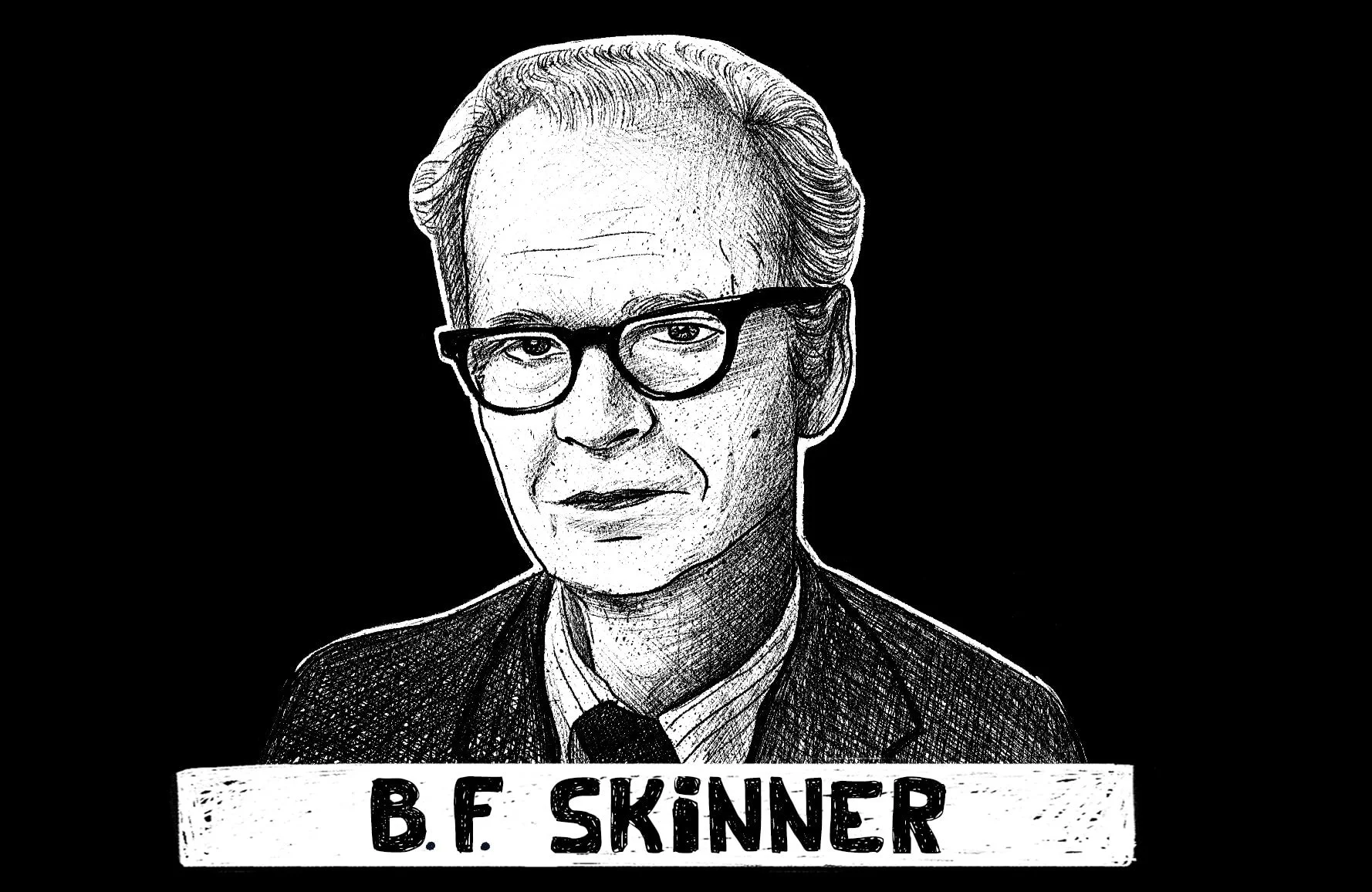
Burrhus Frederick Skinner, a psychologist, studied behaviourism. Skinner believed that the result of human behaviour was determined by their environment.
The experiment “Operant conditioning and the law of affect”
The Aim: Skinner believed that classical conditioning lacked depth and that humanity was far more complex, thus theorising ‘operant conditioning’ through actions and their consequences.
The Method:
The research consisted of creating a box in which he placed animals. Rats to press a lever and pigeons for key pecking, which recorded the timeframe and either rewarded or punished the animal to determine what could increase, decrease or extinguish behaviour.
The results:
Changing behaviour can be done by introducing an operant to condition a perceived result. A positive reinforcement can strengthen behaviour if a person finds it rewarding, and negative reinforcement can remove a negative response to strengthen the experience for a better result.
The negative aspects of the research:
It does not account for inherited and cognitive thinking, such as instinct, thus conditioning cannot be implemented if individuals do not value what is being presented towards them or that direct experiences are not the only way humans can learn. The research also does not include those individuals who may become over-reliant on rewards.
Ethical issues were raised from the lack of consent from the animals to their treatment, which could have been harmful. Some question whether we can verify animals to humans.
What did the research teach us?
Behaviourism can be observed and learned. Behaviour modification through both the changing of the environment with the reinforcement of positive behaviour and ignoring negative behaviour. A reward often increases desired behaviour, or a desire to get one.
Punishment is designed to counteract a negative response, yet comes with several issues, including:
- Suppressing emotions and behaviour.
- An increase of negative feelings such as anxiety, fear and anger.
- Sometimes it does not lead to the intended behaviour and may not educate.
How did the research impact humanity?
The education and correctional systems changed the way they interacted and taught with new implemented techniques.
Conclusion:
Skinner’s experiments inspired clinical psychologists, including educationalists and thus the development of ‘Cognitive Behaviour Therapy’ [CBT] was developed in treating patients with mental health conditions (C. Colin, 2018; S.A. McLeod, 2018).
Practically applying the psychological studies results in society
Dr David Rosenhan’s experiment and the anti-psychiatry movement challenged the diagnosis of mental disorders, and therefore, a third edition of the DSM [The Diagnostic and Statistical Manual of Mental Disorders] was made, whereby many psychiatrists agreed upon the diagnosis of patients with many observable signs and symptoms, including a deeper understanding of disorders with the more detailed descriptors (H. S. Deker, 2021).
Although further research, such as Thomas Scheff’s (1974) labelling and therapy with Mental disorders and important notions were highlighted in psychiatry, other adaptations seemingly were not brought forth(K. Fielder and D. J. Gruning, 2021). That being said, it could be argued that Rosenhan’s research formed the beginning of the closure of asylums and deinstitutionalisation (I. Cummings, 2017). Nearly a decade later from Rosenhan’s study in 1981, the Jay Report published the ‘care in community’ program, which aided individuals to leave long-term institutional care and return to their communities, thus setting a new era in psychiatric patient care (Historical England, 2021). Furthermore, Baker (2000) reports poor standards within psychiatric units and Quirk and Lelliot (2004) state that the shift in psychiatric admission and care has caused detrimental effects for patients. Moreover, Jones et al (2010) conclude that patients report several issues within psychiatric wards, which compromise the recovery of individuals. The Royal College of Psychiatrists (2011) produced a report on guidance on good psychiatric units in relation to better care (I. Cummings, 2017). In 1989, the ‘Griffith report’ was published by the government, which led to the ‘National Health Service and Community Care Act 1990’, leading to even better care for patients. Additionally, in 1999, the National Service Framework (NSF) introduced the mental health setting minimum standards and good practice within the UK (Historic England, 2021). Thus a continual improvement within the system.
Expanding from the movement from institutions, over the years, several documents by governments and officials highlight the importance of patient experience in improving the care patients receive. In 2008, the Department of Health published ‘The Darrzi report’ Which highlighted the urgent need to humanise healthcare within the NHS in the UK (RCP, 2021). Furthermore, the AAR (Accelerated Access review) was created by the government in November 2014 to allow NHS patients to improve services with more rapid treatment and diagnosis options to improve their outcomes. It was determined that the patients needed a voice in the matter of bringing the concept to success; the “I statements” permitted patients to share their views in alignment with the report through National voices. Overall, Rosenhan’s study inspired many changes within psychiatry.
Harry Harlow’s infamous Monkey experiment in the 1950’s and 160’s developed further understanding of the importance of bonding, which shifted the way the western world parented in the 19th century (C. Colin, 2018). It was reported that in orphanages, service providers such as adoption agencies and social services approached childcare with the understanding that babies and children needed emotional support as much as they needed food and shelter from the studies by Rosenhan, John Bowlby and Mary Ainsworth, which furthered more advanced research and understanding of attachment (K. Cherry, 2020).
In 1989, the UK government published the ‘Children’s Act’, which stated the importance of protecting children (Gov, 2021). This has gone through many adaptations over the years to highlight all possible routes of childcare provisions from parental care, state care, boarding schools and childminders in order that children receive the best care possible and to minimise harm.
The NNSPCC, founded in 1884, whom advocate for the protection of children, has been campaigning for many policies, one being the ‘fight for a fair start’ in which they acknowledge the importance of the perinatal bond with babies and for attachments to be made. Furthermore, the UK only have 27 specialists to support those who need additional support and guidance, which is insufficient (NSPCC, 2021),
Although practices have improved over the years within the UK, there are still some issues within parenting and the care services. NICE published a guideline for clinicians and service commissioners involved with the care of children with attachment difficulties and providing better high-quality care for them in May 2016, labelled as ‘Children’s attachment’, acknowledging, in addition to closing the gaps within the service (NICE, 2016).
There are several organisations aimed at better care and protection for children, such as Willis Parmer, founded in 2014, whom advocate for the training of Attachment theory within the social services with the aid of Psychologists and other professionals (Willis Parmer, 2021). Other companies, such as the child psychology service, highlight the importance of specialised care for traumatised children who have not had safe and secure attachments. They work alongside the BPS and OFSTED, including offering training and therapy resources in the UK(TCPS, 2021).
The independent care of social care published the ‘The case for change’ report in 2021, highlighting what needed to change within the system from the huge shift that the global pandemic of 2020 (Independent Care of Social Care, 2021).
Independent people do recognise the difficulties that arise with attachments and advocate to change the systems, such as the introduction of Kangaroo care for premature babies and skin on skin in the 1980’s, later introduced by WHO and furthered on NICE guidelines within intrapartum care, including UNICEF offering resources for building relationships.
B.F.Skinners 1930’s Operant conditioning theory at the time was revolutionary for establishing a scientific methodology for behaviourism and providing modules for further psychological studies. Furthermore, changing how we teach. Skinner developed a teaching program named the ‘teaching machine’ that gave feedback to pupils throughout their projects, which was incorporated within educational settings. A philosophical movement through Europe soon emerged where logical positive thinking with meaningful experiences, which coincides with America’s belief in the value of actions through their consequences. Although during the 1960’s and, Albert Bandura’s theories changed Behaviourism to mental processing. Skinner’s research was the base of CBT, widely used in the UK (C. Colin, 20218).
Teaching methods changed with Skinner’s behaviour modification, with parents and schools providing positive reinforcement to encourage good behaviour and only using negative reinforcement techniques as a last resort. These methods are seen to be healthier for the children’s development. Other methods of teaching involve the ABC model, whereby caused behavior is identified, and consequences are used to prevent future negative behaviour. This can be seen in practice by reward charts, stickers and positive praise, including smiles and hugs (Kids’ development). Other practices include breaking down tasks into smaller tasks, withdrawal of privileges when children break the rules and not picking up crying babies, including praising learning words to learn independently (Nursery world, 2014).
PACEY published a paper on theories of child development labelled ‘Supporting Members to Provide the highest standard of care and learning for children’ in 2016, which was a guide for understanding theories of child development and their influence on the early years practice that has been implemented in EYSF within the UK’s education system (Professional Association for Childcare and Early Years, 2016).
Although all the psychologists received criticism for their research, each one has made an impact on society and has independently changed laws, policies and procedures; moreover, how we live life today.

Ethical Issues
Dr Rosenhan developed the theory that psychiatrists could not distinguish the sane from the insane and conducted a field experiment named “Being sane in insane places”, whereby he and other participants were admitted to psychiatric hospitals and labelled as schizophrenic. This demonstrated that he was correct in his ideology, as none of the participants was mentally unwell or that the symptom was a fictional pseudo-symptom.
However, this experiment raised ethical implications within his practice, such as the lack of consent and the deception of both hospital staff and patients, as well as the inability to withdraw from the experiment. Moreover, the results from the experiment could have prevented genuinely ill individuals from seeking help if they desperately needed it. Furthermore, his ability to deceive psychiatrists or falsify the results without the full details being published (Integrated social psychology, 2018; Spitzer, 1975). It is difficult to understand why such an experiment was approved when it puts individuals at risk, including precious resources being used, which are already in limited supply. Furthermore, there was no consideration given to the patients’ feelings or views (I, Cummings, 2017).
Dr Harry Harlow’s ‘monkeys’ experiment sparked much debate due to several ethical issues raised within his practice, especially for the harmful treatment of the monkeys and the lasting effects (McLeod, 2020). However, some say the ethical implications do not dismiss the important facts the research brought forward and that too many people overlook the cruelty (D. Frye, 2016). In 1985, the APA halted Harlow’s experiments by invoking the USA Laboratory Animal Welfare Act of 1966 by insisting that any universities and colleges that perform educational research with animals establish IACUC’S (Institutional animal care and use committees), which sought to regularly inspect experiments using animals, ensuring safe, ethical treatment and care(Stowell, Herzog, 2017). Singer (1975) writes in his book Animal liberation calls out Harlow’s research is exploitive and unjustifiable, alongside Stephens (1986), who states that Harlow’s experiments were expensive, unethical and did not prove anything that was not obvious. (J. P. Gluck, 1997).
Another psychologist who used animals in his testing to produce world-renowned results was B.F Skinner and his ‘Operant conditioning’, whose research became under scrutiny for ethical implications with the conditions that the animals suffered in the small ‘Skinner box’ by animal welfare organisations. Furthermore, we cannot distinguish animal behaviour from that of humans and its legitimacy (Good Therapy, 2021).
In conclusion, there are many positives, yet negatives in what we do since a lot has to do with perception, what some may call unethical, others call necessary, therefore, the ethical implications raised in psychological research can be subjective.
Phoenix85

Bibliography and reference list (Ethical issues)
Integrated social psychology, 1999-1921, Being sane in insane places, Available from: https://www.integratedsociopsychology.net/mental-health-2/on-being-sane-in-insane-places/ [Accessed on 20.12.21]
Ian Cummings, Jan 2017, Vol 28, Issue 1, vol 1, Rereading Rosenhan, Available from: https://journals.sagepub.com/doi/full/10.1177/1054137317690377 [Accessed on 20.12.21]
McLeod, S. A. (2020, September 19). Harry Harlow, monkey love experiments. Simply Psychology. www.simplypsychology.org/harlow-monkey.html
Psychology today, D. Frye, 2016, available from: https://www.psychologytoday.com/gb/blog/the-first-impression/201607/revisiting-harry-harlow-s-legacy-cruelty-towards-monkeys [Accessed on 20.12.21]
Good therapy, 2007-2021, Skinner box, available from: https://www.goodtherapy.org/blog/psychpedia/skinner-box [Accessed on 20.12.21]
APA, 2012, Harold Herzog, The ethics of behavioural research using animals, available from: https://www.apa.org/pubs/books/4316177-sample-chapter-21-Stowell-Herzog.pdf [Accessed on 20.12.21]
John P. Gluck, Harry H. Harlow and animal research: Reflection on the ethical paradox,1997, Ethics and behavior, Wellbeing international, available from: https://www.wellbeingintlstudiesrepository.org/cgi/viewcontent.cgi?article=1112&context=acwp_arte [accessed on 20.12.21]
Images from UnSplash and the header image from Google.
Reference list (Introducing Psychology)
NICE. Available from: https://www.nice.org.uk/about/who-we-are/history-of-nice [Accessed on: 07/12/21]
Psychology review, Available from: https://oxfordre.com/psychology/view/10.1093/acrefore/9780190236557.001.0001/acrefore-9780190236557-e-631 [Accessed on 19.12.21]
APA, 2021, DSM history, available from: https://www.psychiatry.org/psychiatrists/practice/dsm/history-of-the-dsm [Accessed on 19.12.21]
Journal of the History of the Behavioural Sciences, Vol. 41(3), 249–267 Summer 2005 Published online in Wiley Interscience (www.interscience.wiley.com . DOI 10.1002 /jhbs.20103 © 2005 Wiley Periodicals, Inc.
Justman, Stewart, "Below the Line: Misrepresented Sources in the Rosenhan Hoax" (2021). Global Humanities and Religions Faculty Publications. 13. https://scholarworks.umt.edu/libstudies_pubs/13
N. Gupta and S. Kapur, The European journal of psychiatry, 6th Sept, 2021, Medical publishing: a flawed model in dire need of reform, Available from: https://www.sciencedirect.com/science/article/pii/S0213616320301087 [Accessed on 19.12.21]
K. Fielder and D.J. Geuning, A social psychology toolbox for clinical psychology, Available from: https://econtent.hogrefe.com/doi/pdf/10.1027/2151-2604/a000447 [Accessed on 19.12.21]
Ian Cummings, (2017, Rereading Rosenhan, Illness, crisis and loss, Volume 28, issue 1, Available from: https://journals.sagepub.com/doi/full/10.1177/1054137317690377 [Accessed on 19.12.21]
Historic England, 2021, Disability history in the 19th century, available from: https://historicengland.org.uk/research/inclusive-heritage/disability-history/1945-to-the-present-day/ [Accessed on 19.12.21]
Crown and database right, Legislation Gov, National Health Service and Community Care Act 1990 available from: https://www.legislation.gov.uk/ukpga/1990/19/contents [Accessed on 19.12.21]
Royal College of Physicians, guidelines and policies, Available from: https://www.rcplondon.ac.uk/guidelines-policy/patient-experience-adult-nhs-services-nice-guideline [Accessed on 19.12.21]
Proff Lord Darzi, Department of Health, 30th June 2008, High Quality Care For All – NHS Next Stage Review Final Report, Available from: https://webarchive.nationalarchives.gov.uk/ukgwa/20130105053023/http://www.dh.gov.uk/en/Publicationsandstatistics/Publications/PublicationsPolicyAndGuidance/DH_085825 [Accessed on: 07/12/21]
L.Todres, K.T., Galvin and I Holloway, International Journal of Qualitative Studies on Health and Well-being, 12th Jul 2009, The humanisation of healthcare: A value framework for qualitative research, Vol 4, Issue 2, Available from: https://www.tandfonline.com/doi/full/10.1080/17482620802646204 [Accessed on: 07/12/21]
Gov, 2016, available from: https://www.gov.uk/government/publications/accelerated-access-review-final-report [Accessed on 07/12/21]
NHS England, Research plan, 4th April, 2017, available from: https://www.england.nhs.uk/wp-content/uploads/2017/04/nhse-research-plan.pdf [Accessed on 07/12/21]
C. Colin Etal, 2018, The psychology book, London, Penguin random house company.
R. Gross, 2020, The science of mind and behavior 8th ed, London, Hodder Education.
Y. R. Hong et al, Clinical and experimental paediatrics, impact of attachment, temperament, and parenting on human development, 2012, Vol 55, Issue 12. available from: https://www.ecep.org/journal/view.php?doi=10.3345/kjp.2012.55.12.449 [Accessed on 19.21.21]
Very well mind, 3rd Dec 2020, Kendra Cherry, Harry Harlow and the nature of affection, available from: https://www.verywellmind.com/harry-harlow-and-the-nature-of-love-2795255#toc-impact-of-harlows-research [Accessed on 20.12.21]
NICE, 2021, NCCMH Children’s attachments, May 2015, available from: https://www.nice.org.uk/guidance/ng26/documents/childrens-attachment-full-guideline2 [Accessed on 20.12.21]
Available from: https://information-britain.co.uk/famdates.php?id=566 [accessed on 20.12.21]
Available from: https://www.nspcc.org.uk/support-us/campaigns/fight-for-a-fair-start/ [accessed on 20.12.21]
Gov, 2021, available from: https://www.gov.uk/government/groups/independent-review-of-childrens-social-care [accessed on 20.12.21]
Independent review of children’s social care, 2021, available from: https://childrenssocialcare.independent-review.uk/case-for-change/ [accessed on 220.12.21]
Gov, 2021, the 1989 Children’s Act, available from: https://www.legislation.gov.uk/ukpga/1989/41/contents [accessed on 20.212.21]
The child psychology service, 2021, available from: https://thechildpsychologyservice.co.uk/specialist-trauma/therapeutic-parenting/ [accessed on 20.12.21]
Willis Palmer, 2021, available from: https://www.willispalmer.com/about-us/our-history/ [Accessed on 20.12.21]
Nice, 2021, available from: https://www.nice.org.uk/guidance/qs105/chapter/quality-statement-7-skin-to-skin-contact [Accessed on 20.12.21]
UNICEF, 2021, available from: https://www.unicef.org.uk/babyfriendly/news-and-research/baby-friendly-research/research-supporting-breastfeeding/skin-to-skin-contact/ [accessed on 20.12.21]
Infant journal, 2013, supporting skin to skin care in the neonatal unit, Volume 9, Issue 3, available from: https://www.infantjournal.co.uk/pdf/inf_051_rti.pdf [Accessed on 20.12.21]
Pacey, 2016, supporting members to provide the highest standards of care and learning for children, available from: https://www.pacey.org.uk/Pacey/media/Website-files/PACEY%20member%20practice%20guides%20(PDFs)/PG28-Theories-of-child-development.pdf [Accessed on 20.12.21]
American history, Skinner teaching machine, available from: https://americanhistory.si.edu/collections/search/object/nmah_690062 [Accessed on 20.12.21]
B.F.Skinner, The technology of teaching, 1968, by Meredith corporation. Available from: file:///C:/Users/Victoria%20Louise/Downloads/ToT.pdf [accessed on 20.12.21]
Kids development, 2021, BF Skinner behavioural theory, Available from: http://www.kidsdevelopment.co.uk/BFSkinnersBehaviouralTheory.html [Accessed on 20.12.21]
Nursery world, 2021, Linda Pound, Sept 2014, early years pioneer Burrhus Skinner, Available from: https://www.nurseryworld.co.uk/features/article/early-years-pioneers-burrhus-skinner [Accessed on 20.12.21]
Bibliography and reference list:
YouTube, 2021, available from: https://www.youtube.com/watch?v=j6bmZ8cVB4o [Accessed on 23/11/21]
D. L. Rosenhan, Symposium, On Being Sane in Insane Places, 13 Santa Clara Lawyer 379 (1973). Available at: http://digitalcommons.law.scu.edu/lawreview/vol13/iss3/3 [Accessed on 23/11/21]
YouTube, 2021, available from: https://www.youtube.com/watch?v=SsyNVoWU6yE [Accessed on 23/11/21]
McLeod, S. A. (2020, September 19). Harry Harlow, monkey love experiments. Simply Psychology. www.simplypsychology.org/harlow-monkey.html
The president and fellows of Harvard College, 2021, available from: https://psychology.fas.harvard.edu/people/b-f-skinner [Accessed on 24/11/21]
APN, Journal of Experimental Psychology, B.F. Skinner, superstition in the pigeon, 1992, Vol 121, no.3, pages 273-274, https://psych.hanover.edu/classes/Learning/papers/Skinner%20Superstion%20(1948%20orig).pdf
McLeod, S. A. (2018, January 21). Skinner - operant conditioning. Simply Psychology. www.simplypsychology.org/operant-conditioning.html
Frontier Psychiatrist, September 2010, available from: http://frontierpsychiatrist.co.uk/the-rosenhan-experiment-examined/ [Accessed on 24/11/21]
Angel, E.N. (2021, Nov 15). Rosenhan (1973) Experiment - 'On being sane in insane places'). Simply Psychology. www.simplypsychology.org/Rosenhan_experiment.html
C. Colin Etal, 2018, The Psychology Book, London, Penguin Random House Company.
R. Gross, 2020, The science of mind and behavior 8th ed, London, Hodder Education.