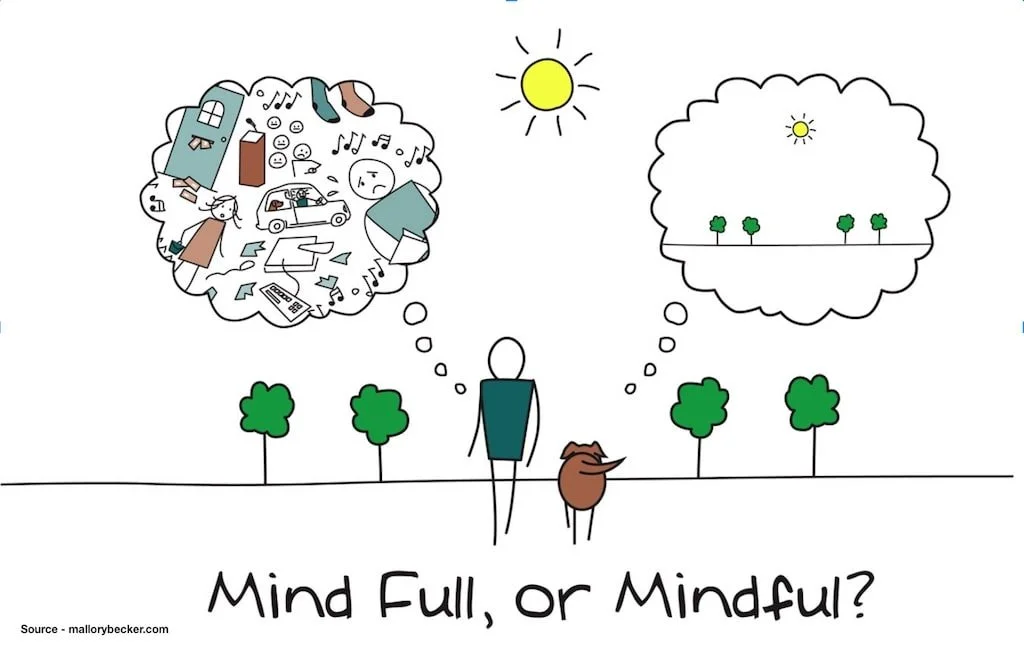
Mindfulness & Meditation; it’s not what you think it may be….
I see meditation being suggested as a treatment option for coping with mental health issues and chronic pain by several health organisations. It’s nearly always presented with an image of a person sitting cross-legged, with their index finger and thumb touching, beside a lake or mountain, etc. Except that picture is not a true reflection of what meditation is all about, nor the lack of real-world education about the topic.
I’m currently taking a mindfulness module as a 3rd-year BSc psychology student, and it's been an eye-opening experience because what I thought I knew about mindfulness isn’t the reality. I fear that this is a common experience for many individuals.
I was apprehensive about mindfulness because I had often tried it, but I was always unsuccessful. So, I thought it was pseudoscience, being pushed as a narrative, but I was vastly wrong. Over the last three months, through learning, studying, and practising mediation, I have discovered its benefits and beauty, and I want to share what I know with you as simply as possible…
The average mind wonders nearly 50% of the time. It is entirely natural, and mindfulness is not the process of completely shutting down the brain and silencing it, but of bringing back your awareness of the moment you are in, just being, and not sitting in silence in your mind (however, if you can do that, that’s great!).
Neuroplasticity is an incredible thing; you are absolutely not set in your ways, and you can retrain your mind to think and feel better. Practising mindfulness regularly can help promote the growth of new neurons and prevent cortical thinning, and over time, you will improve. You can see improvement in as little as 8 weeks.
Mindfulness doesn’t have to be a structured and timed practice; you can do it within your day-to-day, and you do not have to attend a class, do it for an entire hour, or sit, etc. Meditation is a personal journey, and you can do it in a way that works for you. There is no wrong way to do it.
Mindfulness isn’t for everyone, and it can have adverse effects. People with breathing problems need to be highly vigilant, as slowing or controlling their breath can cause issues. Meditation can cause seizures in epileptics and trauma response for those with CPTSD.
Making it work for you if you don’t have time? Ten minutes a day is enough, in fact, do it for 2 minutes while the kettle is boiling. You don’t like to sit? Then you can just stand, lean on something, take a walk – it is your journey, and you practice your way. Can’t you switch off your mind? You’re not supposed to; it’s about realising when your mind has wandered and bringing it back to the present moment, feeling the sensations in your body, the noises you can hear in your environment, the smells you can smell, and switching off from auto-thinking mode to just being. Noticing the world go by is awareness, and a form of mindfulness.
Here are some important points:
Mindfulness is over 2,500 years old; it’s not a new practice, and there is simply no right or wrong way to do it. However, seeking out teachings can help you gain a deeper understanding of yourself and the practice.
If you fall asleep in a practice, it’s ok; you need the sleep, and it’s not uncommon not to feel any benefits straight away.
Sometimes, benefits are subtle changes, like lowering your blood pressure and heart rate.
Stop when your mind and body want to stop.
The key is to replace self-criticism and negative talk with inner nurturing and wisdom, finding the calm within you, and recognising that you are the expert of you. Just remember, don’t have an agenda, be open and let yourself just experience. Finally, most of our own suffering comes from within, and from how strongly we believe our thoughts. But you are not your thoughts, and you can release them.
You can have access to a free 8-week mindfulness course at Palouse here.
I hope this article helps you better understand mindfulness and inspires you to try it.
Fenix85.
(This article is also available on the digipsych online blog).
Images from Upsplash.