
White working-class boys are most likely to underachieve in education?
I wrote this essay for my Access to University course (2021-2022) for the sociology module. With the recent ongoings within the UK around immigrants and race, I thought it was worth a share…
Please do not plagiarise my work.
Human-written, AI-free!
White working-class boys are most likely to underachieve in education
Within this essay, I discuss whether white, working-class boys are likely to underachieve in the UK education system. Furthermore, if they do underperform, why? Reviewing as many documents as possible from a wide range of sources, reach an informed conclusion.
OFSTED: Office for Standards in Education has regularly inspected schools since 1992. formed to investigate places of education and care, and to report and inform the public of the standard of the establishment. These independent reports can be viewed online by both the public and notify policymakers of the effectiveness of the policies at the establishments (Home Office, 2022). In 1993, they published a report, ‘Access and achievement in Urban Education’, which highlighted shortcomings in the education system, particularly for white working-class boys (David Bell, 2003). This posed the question, why are white working-class boys underachieving? Moreover, what can be done?
Understanding the UK class system:
Traditionally speaking of ‘classes’, there are:
‘Aristocrats/elites’ - Titled people with generational wealth.
‘Upper Class’ - Financially stable,
‘Middle class’ - Educated, professionally working, and financially comfortable.
‘Working class’ - Low income, low education, financial instability.
‘Lower class’ - Unemployed/homeless.
There is some speculation about the definition of ‘working class’. Colins (2002) defines ‘working class’ as ‘people who do not own property, have physical labour jobs rather than academic and intellectual, therefore have a low social and economic status’.
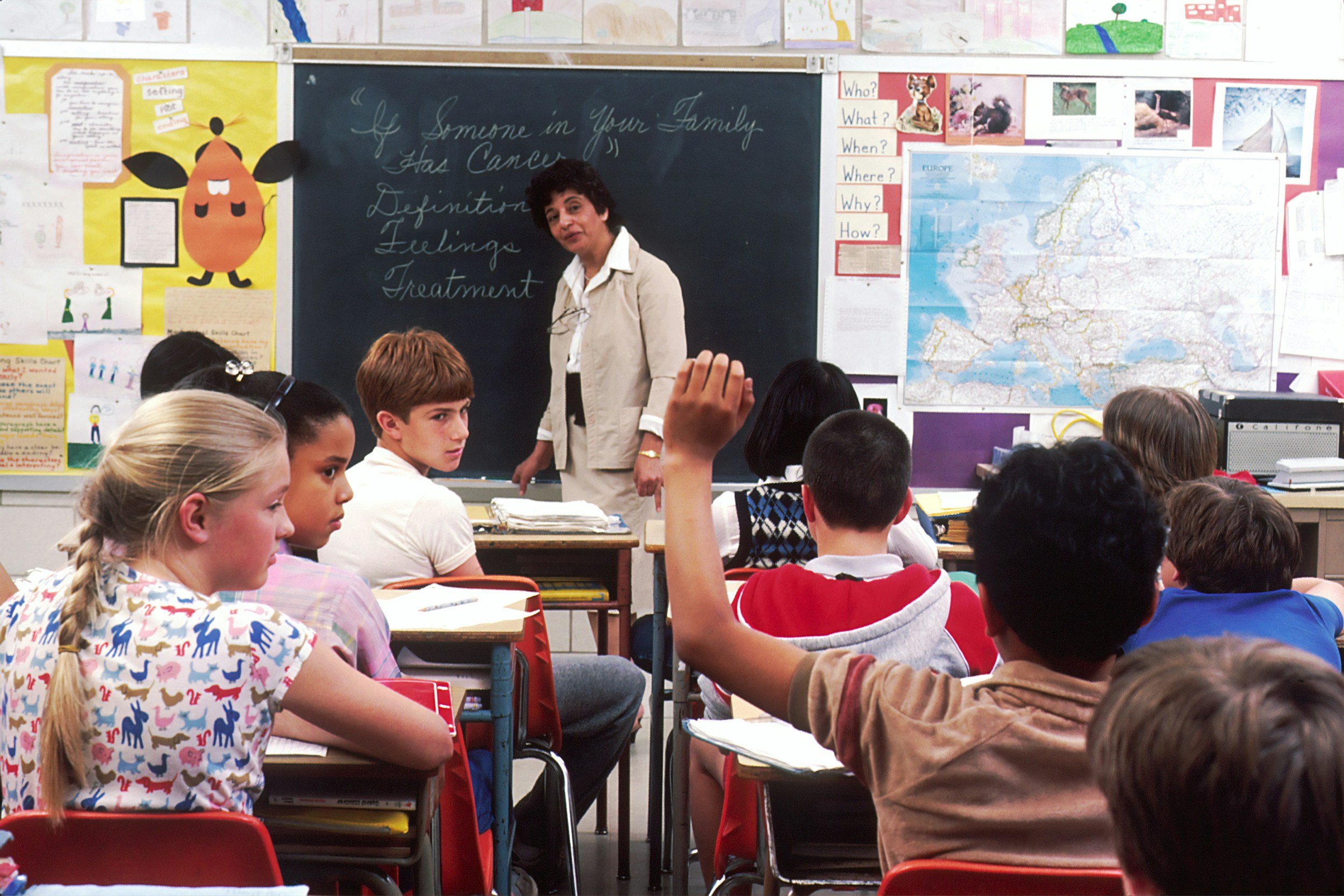
What may be causing white working-class boys to underachieve?
Location, location, location
Although the UK is a developed country, the Institute for Fiscal Studies has established that the United Kingdom is geographically unbalanced in comparison with other countries. For example, there are areas with low social capital, resulting in low attained qualifications and high unemployment rates as a consequence, alongside a lack of community and connection for some individuals. Therefore, the location of a school makes a difference in the students’ performance.
Dr Javid Khan says, “Geography clearly has an impact, too. The evidence shows, for example, that white pupils in the north east have some of the worst educational outcomes, yet pupils from all backgrounds in places like London do better, irrespective of their race.” The worst white British urban areas in England with low Income Deprivation Affecting Children Index (IDACI) marks are Middlesbrough, Blackpool, Knowsley, Liverpool and Hull (Home Office, 2021-2022). Consequently, schools in affluent locations perform better than those in destitute areas, and children in these areas struggle the most with their disadvantages, which reflects on their grades.
The Government have acknowledged this, and other shortcomings with policies to improve areas such as ‘the industrial strategy’ (2016), ‘The towns funds’ (2019), and ‘Build back better’ plan initiatives to ‘level up’ and support those who have been ‘left behind’ to tackle ‘root causes’ (Home Office, 2021-2022).
Quality of the school and teaching:
The Sutton Trust discovered that high-quality teaching is important for students affected by their environment, and this can effectively improve their grades with good teachers. The central government introduced the ‘Early career framework’ to enhance teaching efforts in underprivileged schools where they struggle to keep teachers.
A commissioner for the Race and Ethnic Disparities commission, Martyn Oliver, states, “having teachers and staff who can relate to the children is a massively important aspect of this. However… a good teacher is by far the most important influence.” This may aid students to have a good role model and connect with them. It does not help the situation when schools in deprived areas are not qualified, not experienced and have a high teacher turnover. Having the government focus on teaching incentives to improve quality teaching can make an impact on white working-class students, including raising funding in poorer areas (Home Office 2021-2022).
State vs Private Schools and Social Class:
One prevalent indication is that there is very little information concerning the difference between private schools and state schools. Assuming that a minimal number of white disadvantaged pupils attend elite schools, due to the cost, status and the lack of FSM or data.
Boliver (2013) discovered that there is a low number of white working-class boys in elite and Russell group universities such as Oxford and Cambridge. Studies demonstrate that only 13% of students went to prestigious universities from 1996 to 2006, unlike 35% that represented professional middle-class statuses. Furthermore, a 2007 report by the Sutton Trust noticed a difference between elite Russell group universities’ admissions and the failure to be equal and accept students from non-affluent areas, highlighting discrimination. Moreover, students do not apply because they do not feel like they would ‘fit in’ with these institutions(S. Barrs, 2016). It could be argued that discrimination against the working-class causes white British pupils to aim higher and achieve, because they do not feel worthy or validated.
A study conducted by McCallum and Demie (2001) researched the LA census data; their discovery was of a clear trend in social class and higher grades. Students with parents in professional jobs, university education and home owners had children with the highest level of GCSE results, who considerably performed better compared to unemployed parents, who suffered from overcrowding, housing difficulties, deprivation and poverty. Moreover, further studies have found that social class does impact the lives of children and has a substantial effect on students’ educational outcomes. Reports conducted by Ofsted, Sutton Trust (2005) and YCS (2006) all account for working-class students being less likely to attain high grades than the middle class.
The DfES made a statement in 2006 acknowledging the inequity, covering reports from 1997-2003. The DfE reported in 2013 that only 28% of white working-class boys on FSM gained five or more grades A to C, whilst 37% of white working-class girls did the same, whereas 61% who did not have Free School Meals gained the grades, equating to the largest of any ethic minority gap (Demie, 2014. The working and lower classes struggle with their disadvantages.

Factors that may contribute to the underachievement of white working-class boys include:
Issues in their homelife and parents who do not help them complete homework or participate in extra-curricular activities with their children.
Lack space and resources to study, including a noisy household; a lack of additional tutoring support, no internet, books, and no desk.
Low aspirations passed on by parental cycles; parents who are unemployed, un-educated and in the cycle of poverty.
Fears of the cost of university and impending debt.
Peer pressure of masculinity, cultural gang movements.
Disabilities including mental health issues and learning difficulties such as Dyslexia or focus and attention span problems with ADHD; being bullied. including attention and connection problems that can affect the child’s ability to study.
So what now?
Since the 1993 Ofsted report, the British government acknowledged the inequity within schools and, in 1997, began setting plans to close the gap in social groups. However, with limited comparable national data, there have been difficulties with setting policies. Nevertheless, ‘FSM’ free school meals have been a consistent source of measurable information(F. Demie, 2014).
The recognition sought by the government by placing policies to improve the performance of white boys from working-class families, with the introduction of ‘pupil premium’, ‘Progress 8’ program and the ‘Tool kit’ from EEF, including yearly OFSTED reports. In addition to bringing highly educated teachers to disadvantaged schools and working with schools to rectify the problem, alongside improving funding in poor areas(Home Office, 2014). Will improving environments around schools in deprived areas improve the grades of those underachieving, and therefore should more be done to work towards this goal of improving white working-class British children’s education? So far, it has not.
In conclusion, yes, white working-class boys underachieve more than any other students in the UK education system. It could be argued that coloured working-class boys achieve higher grades due to the cultural differences that have been strived for many years.
Phoenix85
Bibliography and Reference list:
Home Office, Underachievement in Education by White Working-Class Children, 2014-2015. Available from: Education Committee (parliament.uk) [Accessed on 12/03/22]
Great British Mag, 2022, What is the British class system? Sept 2019. Available from: https://greatbritishmag.co.uk/uk-culture/what-is-the-british-class-system/[Accessed on 12/03/22]
Collins dictionary, 2022, ‘Working class definition’ available from: https://www.collinsdictionary.com/dictionary/english/working-class [Accessed on 12/03/22]
Home Office, 2022, OFSTED, available from: https://www.gov.uk/government/organisations/ofsted/about [Accessed on 12/03/22]
David Bell, Access and achievement in urban education: 10 years on, 20/11/2003, The Guardian, Available from: Access and achievement in urban education: 10 years on | Schools | The Guardian [Accessed on 12/03/22]
F. Demie, The Educational Attainment of White Working Class Pupils, May 2014, Lambeth council, available from: Microsoft Word - White Working Class Achievement- empirical evidencev15 (lambeth.gov.uk) [Accessed on 12/03/22]
House of Commons, the forgotten: how White working-class pupils have been let down, and how to change it, 2021-2022, Available from: Left behind white pupils from disadvantaged backgrounds (feweek.co.uk) [ Accessed on 12/03/22]
S. Baars, et al., The underrepresentation of White working class boys in higher Education, King’s College London, July 2016, LKM, Available from: The-underrepresentation-of-white-working-class-boys-in-higher-education-baars-et-al-2016.pdf (cfey.org) [Accessed on 12/03/22]
Images on blog from UnSplash, and header image from Google.