
Psychology: How feminism has shaped parts of the character of psychology
I wrote this essay for my 1st year of my Psychology Degree (2023-2026), in my conceptual and historical issues in Psychology module. I guess I see myself a little as a feminist,,,
Please do not plagiarise my work.
Human-written, AI-free!
How feminism has shaped parts of the character of psychology
This essay aims to discuss the lack of acknowledgement of women within the psychological field and its overall effect, which can still be seen today. The Cambridge dictionary defines feminism as “The belief that women should be allowed the same rights, power, and opportunities as men and be treated in the same way, or the set of activities intended to achieve this state” (Cambridge dictionary, 2024). Meanwhile, feminist psychology is identified by “Movement in psychology aimed at understanding women; it is particularly concerned with the way in which women are treated in mainstream psychology” (M. Brysbaert, 2020).
Feminism is important within psychology because there are two sexes, men and women. This means there needs to be an equal distribution of research amongst the sexes to provide a realistic insight into human behaviour and the mind, which would support proper diagnosis and treatment of female mental health.
Psychology has been criticised for being dominantly ‘White Western males’; this transpires in being only interested in topics concerning middle-class males. This has resulted in male dominance in academia and a lack of contributions from other groups of people, as noted by Vaid & Geraci (2016). Other issues include the use of only male norm samples, men taking charge of choosing investigations, biased study results publishing, stereotyping, and women being excluded. This has led some feminist psychologists to argue that the practice is not as objective as it claims to be. They protest that the discipline halts their continued path of practice, to avoid ongoing discrimination against other groups, by including them in psychological research and acknowledging them (Brysbaert, M, 2020).
Furthermore, Bosson, K J. et al. (2013) explore the notion of ‘Precarious manhood’ and identify historical psychology as ‘womanless’. Having male norms for the experimental samples leaves an unequal outcome due to gender differences. However, Kimmel and Messer (1989) highlight that men were used to represent ‘People’ as a whole, therefore leaving men ‘genderless’ themselves. Contradicting a favouring towards women, however, one could argue the biological differences between the sexes, and that men could not be ‘genderless.’
Wilhelm Wundt (1832-1920) was known to be the founder of modern psychology. Conversely, Titchener is often more accepted due to Wundt’s ‘blind spots’ in his work. (Buxton,1985) Wundt graduated in 1856 and set up the 1st psychology laboratory in 1876. E. Titchener was a student of Wundt’s, graduated in 1892 and contributed to establishing experimental psychology and later Structural psychology and introspection.
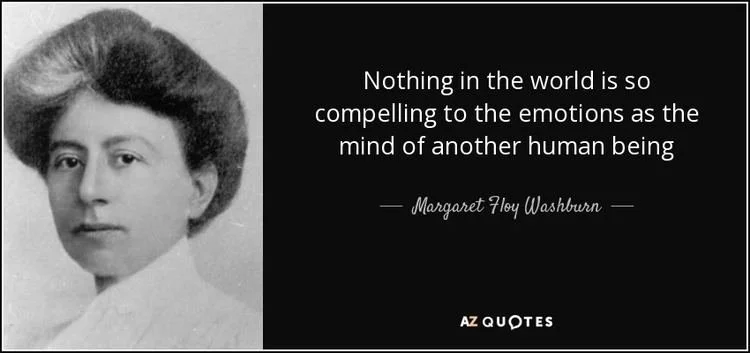
The first American woman psychologist was Margaret Floy Washburn, who gained her Doctoral degree in 1894; however, Mary Whiton Calkins earned her Doctorate that year, but was refused it by Harvard. Washburn developed ‘Motor theory of consciousness’ as her biggest contribution to psychology (APA, 2012). Washburn graduated only 2 years after Titchener, which argues the fact that early psychology is ‘womanless’, although she graduated 38 years after Wundt; this is a fairly short gap. Squire (2016) explains how women did not start to work as psychologists until the mid-19th century. Moreover, these women were from academic families and had prestigious educations. Resulting in a western, white and middle-class discipline, with little representation from colour, homosexuals and working-class individuals.
This further adds to the perception that psychology is ‘white, middle-class and western’ rather than womanless, and has more issues within discrimination and exploring the treatment of women.
Francis Sumner was the first African American to graduate with a psychology doctorate in 1920. He is known to be the ‘Father of Black psychology.’ Whilst the first woman, Inez Beverly, graduated in 1933 (APA, 2012). Leaving only a 32-gap difference between the first woman and the first black person with a psychology degree, a little less than the male and female difference. Furthermore, Han and Zhang (2027) Report that Professor Yuanpei Cai studied under Wundt at Leipzig from 1908 to 1911. Before that, Yongjing Yan translated and published psychology from English as early as 1889. Whilst the first psychological laboratory was set up in Beijing in 1917. (Lawson et al., 2007; Zhao, 2000). This proves that there were minorities and cultures studying psychology, thus it’s not as ‘White’ and discriminatory.
Moreover, the treatment of women and women in the psychological field has not been Satisfactory. P Chestler explores in ‘Women and Madness’ (1972), later revised in 2005, how, during her studies as a psychiatrist, Doctors were taught that women had ‘peins envy’ and doctoral students were trained to blame the victim, because women were inferior, and stereotypically seductive, attention-seeking and hysterical. Furthermore, men were ‘healthy’, their trauma derived from their mothers, and ‘boys will be boys’, solidifying the stigma and reinforcing it through society, leading to inadequate female treatment.
Women studying psychiatry would be kicked out of class if they were to be too ‘vocal’ on prior academics and the issues caused. They were often dismissed, unheard, and fearful of losing their careers by not complying and having all their hard work ripped away from them. Even by the 90’s where more women were in academia, they were not taught about the effects on women’s health. In addition, females are paid less than males, though they are just as qualified and do the same job. (Chestler. P, 2005)
Gurber. J, Etal (2021) researched the gender gap in psychology and career advancement. Women psychology students are growing vastly, and hold leadership positions within the field, gender gaps still exist, especially with career advancement. The APA (2017) Report Issues that include women are published and cited less, are represented and earn less than their male counterparts, plus hold fewer grants. Gurbers reports that there were substantial historical gender differences in hiring, with a preference for men. Subsequently, promotions are going to males, and men are receiving higher statuses overall, whilst women are underrepresented and overworked; although these gaps are closing.
Highlighting how the industry is changing within the feminist movement, with the closure of the gender gaps within science, although some issues remain, in which continued awareness and advocacy could reduce the gaps entirely and reduce further damage. A federation of women psychologists could therefore assist in reducing inequity.
In conclusion, feminist psychology has substantially influenced psychology over the years by challenging the traditional theories, methods and practices, leading to slowly changing into a more inclusive discipline, and removing the inequality within psychology, resulting in more women studying psychology and closing the gaps of discrimination, that being said there is still work to be done to improve the field of psychology, by stamping out discernment against women and addressing concerns seriously, providing audits and a willingness to develop past studies and research.
Phoenix85
References:
APA. (2024, January 4). American Psychological Association. https://www.apa.org/about/governance/president/bio-margaret-washburn
https://www.apa.org/pi/oema/resources/ethnicity-health/psychologists/sumner-prosser
Bosson, J., Vandello, J.A., & Caswell, T. A. (2013). Chapter 8: Precarious manhood. In Ryan, M.K., and Branscombe, N. R (Eds.), The sage handbook of Gender and psychology. Sage books.
Brysbaert, M., & Rastle, K. (2020). Historical and conceptual issues in psychology. (3rd ed.). Pearson.
Buxton, E. C. (1985). Points of view in the modern history of psychology. Academics press, INC.
Cambridge dictionary. (2024, January 4). Feminism definition. https://dictionary.cambridge.org/dictionary/english/feminism
Chestler, P. (2005). Women and madness. Revised and updated. Chicago Review Press.
Gruber, J., Mendle, J., Lindquist, K. A., Schmader, T., Clark, L. A., Bliss-Moreau, E., Akinola, M., Atlas, L., Barch, D. M., Barrett, L. F., Borelli, J. L., Brannon, T. N., Bunge, S. A., Campos, B., Cantlon, J., Carter, R., Carter-Sowell, A. R., Chen, S., Craske, M. G., … Williams, L. A. (2021). The Future of Women in Psychological Science. Perspectives on Psychological Science, 16(3), 483-516. https://doi.org/10.1177/1745691620952789
Han, B. and Zhang, K. (2007). Psychology in China, 2007. The British Psychological Society. https://www.bps.org.uk/psychologist/psychology-china
Squire, C. (2016). Significant differences in feminism in psychology. Psychology rivals. Routledge.
Images from Google