
Theories and understanding Infant attachment in early childhood
I wrote this essay for my access to university course (2021-2022) for the sociology module. This is a subject I am highly interested in, after discovering the case of Genie as a teenager.
Please do not plagiarise my work.
Human-written, AI-free!
The lasting impact of early attachment:
Research suggests that failure to form a bond with a caregiver in early life results in a negative impact for the person throughout their life, and that children can be diagnosed with a series of conditions, such as ODD, Conduct disorder, PTSD and have attachment issues with relationships in adulthood (K. Cherry, 2019).
Enrichment:
Babies who develop a secure attachment tend to have good self-esteem, strong relationships, the ability to trust in others, while being independent and have the ability to perform well in school, allowing success in life and relationships with others (K. Cherry, 2019).
Deprivation:
Deprivation leads to long-lasting effects on the human mind.
- Studies through MRI scans of 42 children, half of whom witnessed domestic violence, demonstrated increased brain function when they were shown angry faces, just like the study conducted on soldiers who were suffering with the effects of combat. This suggests that maltreated children are hyperaware of their surroundings, just like combat soldiers and are at risk of anxiety disorders later on in life, which helps us understand the consequences of the importance of childhood development and safeguarding in the early years (UCL, 2011).
- Gunnar discovered that adults with a history of severe neglect in early childhood had altered cortisol levels, and they suffered with less of the hormone, which was lower in the morning and maintained this level. This dysregulation has been found in a variety of mental disorders, including PTSD, mood disorders and depression. Gunner also found a reduced brain size and prefrontal cortex development changes, which can lead to children having cognitive issues and regulating their emotions (K. Weir, 2014).
This indicates that giving children enriched childhoods is paramount for producing healthy children.

John Bowlby (1969, 1988)
Professor John Bowlby was a psychologist, psychoanalyst and psychiatrist who studied child development and attachment. John Bowlby was inspired by Lorenz’s (1935) study of imprinting, which believed babies have an instinctive need to stay close to a primary caregiver. They fear strangers due to a survival mechanism; for example, they may hurt them.
The theory:
Bowlby was a theorist that bought forward the ‘Monotropy’ theory, babies are born from birth are biologically pre-programed to make attachments, by way of a survival mechanism. Primarily, the mother figure, since they are innately drawn to do so.
Bowlby proposed that there was a ‘critical period’ of up to 2.5 years of a baby’s life for developing attachments; babies who have had any issues during this time fail to create bonds, more so after the ‘sensitive period’ of 5 years.
Bowlby theorised the ‘internal working model’, the brains cogitative framework of understanding the world, self and others, based on the innate attachment of a primary caregiver, helping children to develop interpersonal skills. Any continual disruption with attachments would lead to long-term emotional issues, including maternal deprivation (McLeod, S, 2017).
The findings:
Bowlby theorised that humans have in-built ‘social releasers’ such as crying and smiling to stimulate the caregiver to attend to their needs. Although an infant can form many attachments with people as they grow, there must be a primary caregiver for consistency and security. If the bond with a primary caregiver is delayed or inconsistent before the critical period, the baby will not be able to form real attachments, especially before 12 months of age, leading to irreversible damage to the child. This damage Bowlby described as ‘maternal deprivation.’ Explaining that the long-term effects include: Delinquency, reduced intelligence, increased aggression, depression and affectionless psychopathy (McLeod, 2017).
Critiques:
Rutter (1972) accuses Bowlby of a lack of definition of ‘deprivation’ and ‘privation’ when defining attachment, including the quality of the bond, rather than just the lack of it within the critical period. He argues that the disruption of the bond is important, rather than physical separation from the caregiver. Privation is where there is a total failure of attachment for the baby. This could be from neglect, having many caregivers, or the baby being moved around constantly. These babies do not display any concern or distress when being separated from their caregiver, like most babies would, which specifies that they are securely attached. Children grow up to have social issues. For example, clinginess, attention-seeking behaviour and anti-social manners, which isolate them from their peers more and lead to a lack of stimulation, intellectual growth and a healthy adult. With proper care, any issues the child faces can be reversed; earlier intervention is crucial (McLeod, 2017).
Limitations of Bowlby’s work include the lack of acknowledgement of disabled mothers or caregivers, and what impact this could do for the child, whether the parent is unable to properly care for the child, or the child becomes a caregiver themselves and the impact of this. Bowlby also did not do any further research on how to transform the lives of those who were affected and provide the best care for them.
Support and strengths:
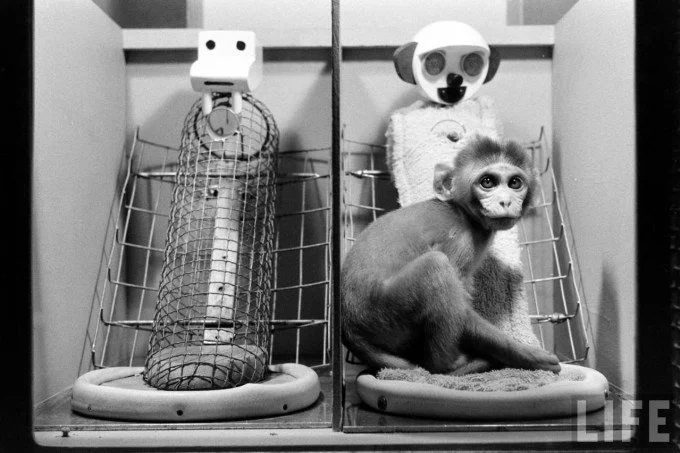
Bowlby’s theory is supported by theorists such as Harlow and his monkeys’ experiment in 1958, when the monkeys were raised in total isolation, thus did not form an attachment, and they developed social and emotional issues due to privation and suffered long-term effects (McLeod, 2017).
Bowlby’s work has changed ideology on emotional bonds with babies and the impact on infants with maternal deprivation, and therefore has led to ‘child-centred care’, which has initiated children to receive better care from birth, with the priority of keeping mother and baby together where possible for healthy child development (K. E Rice, 2017). This has been a revolutionary practice to help produce stronger bonds for the primary caregiver.
In UK prisons, pregnant women can keep their babies with them in a ‘mother and baby’ unit for 18 months, and if they have a small baby at home when they are placed into custody, they can request to be put into one of 6 ‘mother and baby’ units in England. Thus, the bond is not broken or disturbed to protect the well-being of the child (Gov,2022).
Bowlby’s research helped change parenting methods to provide a better insight into the human bond.

Harlow’s monkeys (1958)
Harry Harlow was a psychologist interested in attachment theory.
The experiment “Monkeys”
The Aim: To research Newborn monkeys and how they bond and whether an attachment would be formed with a provider of nutrition or their need for comfort.
The Method: During the 1950’s and 1960’s, Harlow studied attachment with monkeys from birth, removing them from their mother, by providing a wire monkey mother substitute, one with a feeding bottle and the other covered with a terry towelling covering, which provided no food. During a second observation, Harlow placed the monkeys in isolation.
The results: During the wire mother trials, the monkeys spent up to 15 hours a day on the comfort monkey and would only go to the wire monkey for feeding. When a scary object was placed within the cage, the monkey would turn to the comfort surrogate, which would provide security for the monkey.
The negative aspects of the research:
Ethical issues were raised due to the unethical treatment of the monkeys and the emotional and sometimes irreversible damage to them. Alongside, monkeys are not human, and the experiment’s validity is questionable.
What did the research teach us?
The monkey’s behaviour supported the theory that comfort was more important for living creatures than physical. Harlow concluded that maternal deprivation can lead to irreversible damage, although when presented with some socialization they could retain healthy behaviour in the early years.
The controlled, qualitative data collection from the experiment alongside a large number of monkeys with variables taught us that attachment was important for social development, thus further advanced thinking, rational, and research developed over the years.
How did the research impact humanity?
It aided society in recognising the magnitude of bonding; moreover, social workers to understand the importance of attachment and emotional comfort and the risk factors associated with child neglect and abandonment. The study overran the physical needs of the psyche, which was believed to be paramount.
Conclusion: Harlow’s study concluded that you can’t spoil a baby, as prior advice was given to avoid comforting a crying baby and allow them to self-soothe and resulted in changing the approach to parenting in the Western world (S.A. McLeod, 2020; C. Colin, 2018).
Rudolph Schaffer and Peggy Emerson (1964)
Rudolph Schaffer and Peggy Emerson were researchers who studied attachment and developed the theory of the stages of attachment.
The study:
Schaffer and Emmerson conducted a longitudinal study with 60 infants, who were observed every 4 weeks during their 1st year of life and a follow-up visit at 18 months.
Four phases of attachment:
Pre- Attachment stage: Birth to 3 months – Babies do not have any specific attachment to a caregiver.
Indiscriminate attachment: 6 weeks to 7 months – Babies develop a bond with a primary caregiver and can form attachments with secondary caregivers.
Discriminate attachment: 7 to 11 months- The baby’s bond with the primary caregiver is strong and will have separation anxiety when not in proximity to them, with a fear of strangers.
Multiple attachments: 9 months plus – Babies can form emotional bonds with others such as the father, sibling and grandparents.
Factors that influence attachment:
Opportunity: Babies who do not have a primary caregiver, such as babies in orphanages, develop a lack of trust and difficulty in forming attachment due to inconsistent care.
Quality caregiving: Quick, responsive and consistent good care, babies develop a trust and dependence on their caregivers, which allows them the foundation of attachment.
Patterns of attachment:
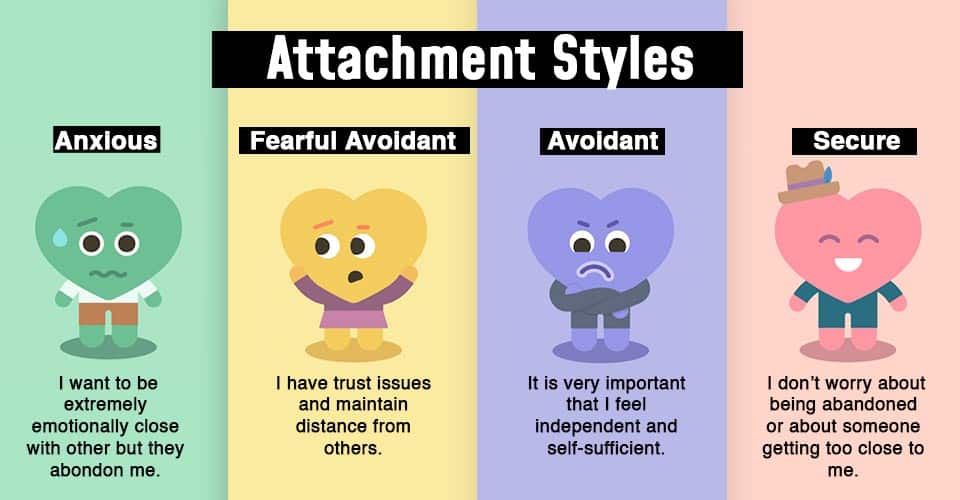
Ambivalent attachment: Babies who become distressed when separated from their caregiver due to poor parental availability and responsiveness, the children develop trust issues, which equate to 15% of the population.
Avoidant attachment: Babies have no preference or bond to a caregiver, usually due to severe abuse and neglectful caregivers, and the child has no trust in their caregiver.
Disorganised attachment: babies who are mixed between secure and insecure, have a lack of clear attachment and may resist the primary caregiver.
Secure attachment: The most common attachment with children who depend on and trust in their caregivers, they are able to seek reassurance if they are anxious. (K. Cherry, 2019)
Critiques:
Limitations of this study include conflicting evidence when considering different cultures, for example, that African and Indian tribes believe in a ‘Village raising a child’, yet children have been found to grow up securely attached with multiple caregivers.
Criticism includes Ainsworth, who recognised the lack of acknowledgement of alternative carers such as foster carers and that the bond is a formation (R. Duschinsky, 2020).
It could also be argued that just because the child cried, it did not mean the child was distressed due to being separated from the caregiver, but the leading research assumes this.
Phoenix85
Bibliography and reference list:
05.12.2011, Maltreated children show the same pattern of brain activity as combat soldiers, UCL, available from: https://www.ucl.ac.uk/news/2011/dec/maltreated-children-show-same-pattern-brain-activity-combat-soldiers [Accessed on 27.06.21]
A. Loughan and R. Perna, July 2012, Neurocognitive impacts for children of poverty and neglect, APA, available from:
Attachment theory, 10 Oct 2017, available from: https://www.integratedsociopsychology.net/lifespan/attachment-theory [Accessed on 22.01.2022]
https://www.apa.org/pi/families/resources/newsletter/2012/07/neurocognitive-impacts [Accessed on 27.06.21]
Human development, John Bowlby’s theory of attachment and relevant book recommendations, July 22nd 2020, available from: https://www.envisionyourevolution.com/human-development/john-bowlby-attachment-theor/7584/ [Accessed on 22.01.2022]
Jan 2020, Kings collage London, available from: https://www.kcl.ac.uk/news/severe-childhood-deprivation-has-longstanding-impacts-on-brain-size-in-adulthood [Accessed on 27.06.21]
John Bowlby, available from: https://www.famouspsychologists.org/john-bowlby/ [Accessed on 22.01.2022]
K. Weir, June 2014, The lasting impact of neglect, APA, available from: https://www.apa.org/monitor/2014/06/neglect [Accessed on 27.06.21]
Kendra Cherry, What is Attachment theory? The importance of early emotional bonds, July 17th, 2019, available from: https://www.verywellmind.com/what-is-attachment-theory-2795337 [Accessed on 22.01.2022]
McLeod, S. A. (2017, February 05). Bowlby's attachment theory. Simply Psychology. Available from: www.simplypsychology.org/bowlby.html [Accessed on 22.01.2022]
Nicola Davis, 06.01.2020, Severe childhood deprivation reduces brain size, study finds, The Guardian, available from: https://www.theguardian.com/science/2020/jan/06/severe-childhood-deprivation-reduces-brain-size-study-finds [Accessed on 27.06.21]
Images on blog from UnSplash and header from Google.